Influential Women Features Tammy Sexton: Advancing Medical Research With Histology Expertise And Laboratory Leadership
WINSTON SALEM, NC, UNITED STATES, September 28, 2026 /EINPresswire.com/ -- Four Decades of Scientific Experience,
Press Release Disclaimer: This is a press release distributed through the XPR Media network. It has not been independently verified by our newsroom.

WINSTON SALEM, NC, UNITED STATES, September 28, 2026 /EINPresswire.com/ — Four Decades of Scientific Experience, Mentorship, and Continual Learning Support Researchers at Wake Forest University School of Medicine
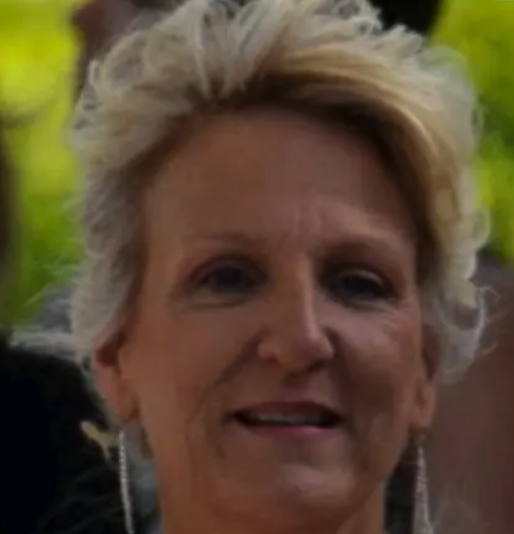
Winston-Salem, North Carolina – For more than four decades, Tammy Sexton has played an important role behind the scenes of scientific discovery, providing the specialized histology expertise researchers depend on to turn tissue samples into meaningful data. As a Research Assistant and HT (ASCP) at Wake Forest University School of Medicine, Tammy manages the Tumor Tissue Pathology Shared Resource Core, a highly utilized laboratory supporting both clinical research trials and basic science projects.
Her work encompasses tissue processing, embedding, microtomy, staining, immunohistochemistry, tissue microarrays, and genomics-related research for cancer and non-cancer studies. Through precision, reliability, problem-solving, and fast turnaround times, Tammy has become a valuable resource for investigators working toward critical publication and grant deadlines.
Tammy began her career in the early 1980s after earning a Bachelor of Arts degree in Biology with a minor in Chemistry from Appalachian State University. What began as an opportunity to explore a new part-time histology position while completing her previous job ultimately developed into a 42-year career at Wake Forest. Her supervisor’s suggestion opened the door to full-time work and allowed Tammy to help launch and develop the histology core.
Over the course of her career, Tammy has contributed to research spanning numerous scientific disciplines. Her experience includes cholera studies in microbiology, physiology and pharmacology research focused on drug abuse, and comparative pathology projects involving atherosclerosis. As research needs evolved, she helped establish and grow the Cancer Center-supported histology core into one of the institution’s most successful and heavily utilized shared resources.
Tammy considers building and managing the histology core to be the highlight of her career. The achievement reflects not only her technical capabilities but also her ability to understand what researchers need and respond with practical, dependable solutions. Her approach has been shaped by strong mentorship from the pathologist who started the lab, as well as a commitment to continually expanding her knowledge.
That commitment has become particularly important as histology has changed dramatically. Traditional staining remains an essential part of the field, but research increasingly moves downstream toward molecular and genomic technologies. Tammy has witnessed this transformation throughout her career and emphasizes that professionals in science cannot afford to stop learning.
For Tammy, lifelong learning is both a professional responsibility and an essential part of remaining valuable in a changing industry. She encourages young women entering science to remain curious, develop new skills, and understand how rapidly research methods can evolve. She also wants aspiring histology professionals to recognize that clinical work is not the only career path available.
Tammy believes there are significant opportunities for professionals who combine clinical skills with research experience. While clinical histology provides valuable training, research laboratories offer another avenue for those interested in contributing to scientific discovery. Greater awareness of these opportunities, she believes, could help introduce more people to a field that many students may never encounter beyond its clinical applications.
Mentorship has also remained central to Tammy’s career. In addition to the guidance she received early on, a relative encouraged her to pursue Mohs training, helping her broaden her clinical capabilities. Throughout her years at Wake Forest, Tammy has likewise supported students, technicians, and postdoctoral researchers through training, guidance, and hands-on knowledge.
Her work is grounded in collaboration. Tammy takes time to understand investigators’ goals and identify the approaches best suited to their projects. Her responsiveness and attention to detail have made her a dependable partner for researchers navigating demanding timelines.
Today, Tammy sees both challenges and opportunities across the field. Grant funding instability can create uncertainty for research programs, while staffing strains continue despite strong demand for specialized expertise. At the same time, the growing integration of molecular and genomic testing is creating new possibilities for histology professionals who are prepared to expand their knowledge.
Tammy’s career demonstrates how specialized technical expertise can have a lasting influence on medical research. Through continual learning, dependable service, mentorship, and a willingness to adapt, she continues supporting researchers whose work may ultimately contribute to a deeper understanding of disease and new medical discoveries.
As histology continues to evolve, Tammy remains committed to learning alongside it—and to helping the next generation recognize the many possibilities available within the field.
Learn More about Tammy Y. Sexton:
Through her Influential Women profile: https://influentialwomen.com/connect/tammy-sexton
Influential Women
Influential Women provides a platform where women from all backgrounds can connect, share their perspectives, and create content that empowers themselves and others. Through storytelling, thought leadership, and creative expression, Influential Women amplifies voices that inspire change.
Editorial Team
Influential Women
email us here
Legal Disclaimer:
EIN Presswire provides this news content “as is” without warranty of any kind. We do not accept any responsibility or liability
for the accuracy, content, images, videos, licenses, completeness, legality, or reliability of the information contained in this
article. If you have any complaints or copyright issues related to this article, kindly contact the author above.

Media gallery