
Top Solar Panel Manufacturer Jingsun Expands Integrated Renewable Energy Solutions
SUZHOU, JIANGSU, CHINA, October 22, 2026 /EINPresswire.com/ -- As global demand for renewable energy and reliable
Press Release Disclaimer: This is a press release distributed through the XPR Media network. It has not been independently verified by our newsroom.

SUZHOU, JIANGSU, CHINA, October 22, 2026 /EINPresswire.com/ —
As global demand for renewable energy and reliable electricity storage continues to grow, Jingsun New Energy and Technology Co., Ltd. is expanding its role in the solar energy supply chain. The company provides solar panels, batteries, inverters, and complete solar power system solutions for residential, commercial, and industrial applications. By combining photovoltaic products with energy storage options and related electrical equipment, Jingsun serves customers seeking integrated solutions for generating, converting, storing, and using solar electricity.
Solar power has become an increasingly important part of the global energy transition. Businesses, households, agricultural operations, and industrial facilities are exploring photovoltaic systems to diversify their electricity sources and manage energy costs. At the same time, improvements in solar module technology and energy storage have broadened the range of applications available to system developers. These developments have increased demand for manufacturers and suppliers that can provide compatible products and support different installation requirements.
For buyers evaluating a Top Solar Panel manufacturer, product specifications and supply capabilities are important considerations. Solar panels must be assessed according to power output, conversion efficiency, module construction, temperature behavior, mechanical loading, and applicable certification requirements. Project developers also need to consider the compatibility of modules with inverters, mounting structures, wiring, and storage equipment. Jingsun New Energy and Technology Co., Ltd. offers a portfolio covering photovoltaic modules and complementary energy products, enabling customers to explore different configurations for their projects.
Solar panels convert sunlight into electricity through photovoltaic cells. When sunlight reaches the cells, it generates electrical current that can be collected and converted into usable power by the system’s electrical components. The amount of electricity generated depends on several factors, including solar irradiance, module characteristics, orientation, shading, temperature, and installation conditions. As a result, evaluating a panel requires more than comparing its nominal wattage.
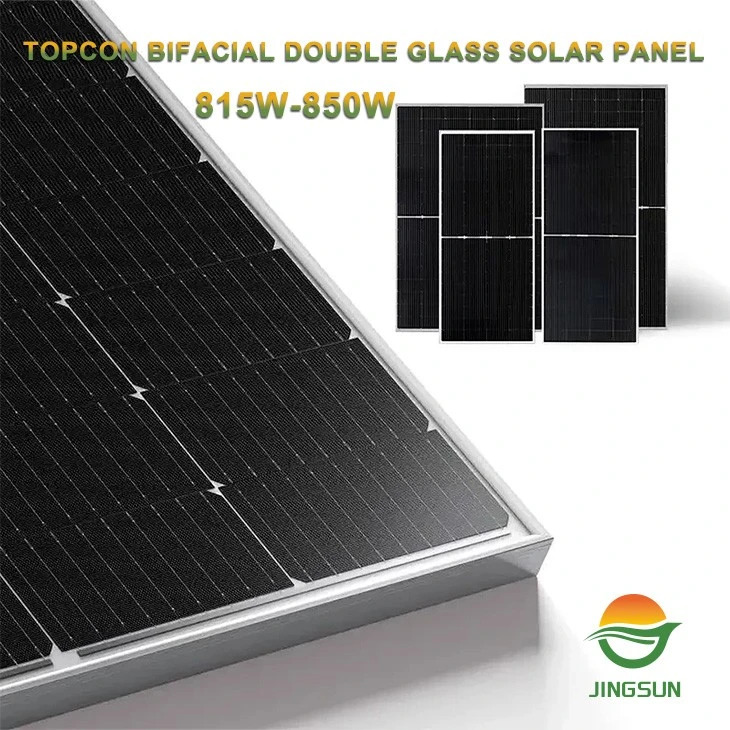
Jingsun’s published product portfolio includes high-power solar modules using technologies such as N-type TOPCon and heterojunction (HJT), alongside other photovoltaic products from established brands. Its website lists modules across several output ranges, including high-wattage bifacial and double-glass designs. These product options give buyers a starting point for comparing module technologies, although actual project suitability depends on detailed specifications, availability, warranty conditions, and the requirements of the installation.
N-type TOPCon technology is designed to reduce certain electrical losses in photovoltaic cells and support high conversion efficiency. Heterojunction technology combines different semiconductor layers to improve charge collection and can offer favorable temperature characteristics in suitable designs. Bifacial modules can generate electricity from light reaching both the front and rear surfaces, depending on the installation environment and reflected light available behind the panel. Double-glass construction uses glass on both sides of the module and may offer advantages for certain durability requirements.
These technology differences matter when designing a solar project. A rooftop installation may be constrained by available space, roof loading, and orientation, making module dimensions and output per unit area important. A ground-mounted solar farm may place greater emphasis on system-level performance, installation costs, mechanical loading, and long-term operating conditions. Bifacial modules can be attractive for installations where ground reflectivity and mounting height allow additional rear-side generation, but the actual energy gain depends on site conditions.
Jingsun New Energy and Technology Co., Ltd. presents its business as covering product development, production, system integration, sales, and service. The company states that it was founded in 2010 and has supplied more than 5 GW of photovoltaic modules, along with over one million system sets and related services. It also reports exports to more than 100 countries and regions. These are company-reported figures and provide context for its stated experience in the international solar market.
Solar panels are only one part of a complete photovoltaic installation. Inverters convert the direct current generated by panels into alternating current suitable for many electrical loads and grid connections. Charge controllers regulate charging in systems that use battery storage, while mounting structures, protection devices, cables, and monitoring equipment contribute to safe and effective operation. For systems designed to operate independently of the grid or provide backup power, battery selection becomes another important part of the planning process.
Energy storage can help address the difference between the hours when solar electricity is generated and the hours when electricity is needed. A photovoltaic system may produce its greatest output during the day, while household demand can rise in the evening. Batteries can store some of the available surplus electricity for later use, depending on system design, battery capacity, charging conditions, and energy management settings. Storage can also support backup applications when the grid is unavailable, provided the system is designed and configured for that purpose.
Jingsun’s product range includes Lithium Battery solutions for energy storage and other power applications. Lithium-based batteries are used in many modern storage systems because they can offer high energy density, flexible packaging, and effective charge-discharge performance when properly designed. Their suitability depends on the specific chemistry, battery management system, rated capacity, operating voltage, temperature limits, and required cycle life.
For solar storage projects, buyers need to match battery capacity with their expected energy demand and operating goals. Capacity indicates how much energy a battery can store, while power rating describes how quickly energy can be delivered or accepted. These specifications are related but not interchangeable. A system intended to supply a few essential household loads during an outage may require a different configuration from a commercial installation designed to shift electricity consumption across the day.
Battery management is also important for long-term operation. A battery management system can monitor cell voltage, temperature, current, and other parameters, helping keep the battery within its specified operating limits. The inverter and battery must be compatible in terms of voltage range, communication protocols, charging behavior, and protection requirements. Buyers should confirm the approved system configuration before purchasing equipment, especially when combining products from different manufacturers.
In addition to lithium-based products, Jingsun New Energy and Technology Co., Ltd. offers Lead Acid Battery options. Lead-acid batteries remain in use across standby power, backup electricity, and certain off-grid applications. They are available in different constructions and capacities, with characteristics that can make them suitable for particular budgets, maintenance arrangements, and operating profiles.
The choice between lithium and lead-acid technology depends on the intended application. Lithium batteries often provide higher usable energy relative to their weight and can support deeper cycling in suitable designs. Lead-acid batteries may offer a familiar and established option for applications where initial cost, availability, or existing system compatibility is important. However, their performance and service life can be affected by discharge depth, charging practices, temperature, and maintenance requirements.
For both technologies, system designers should consider usable capacity rather than relying only on the nominal energy rating. They also need to assess charging efficiency, expected daily cycling, ambient temperature, ventilation, installation space, and the consequences of a power interruption. The battery’s specifications should be reviewed alongside the inverter and charge controller requirements to ensure the complete system operates within its intended limits.
Jingsun also lists inverters and solar power systems among its main product categories. Its portfolio includes grid-connected, off-grid, and hybrid inverter options, as well as solar system configurations intended for different use cases. Grid-connected systems typically operate in coordination with the electricity grid, while off-grid systems require a suitable balance of generation, storage, and demand. Hybrid systems can combine solar generation, battery storage, and grid power according to the selected equipment and control settings.
For residential customers, solar installations may help supply daytime household electricity and, when paired with suitable storage, support selected evening loads. Commercial facilities may use solar energy to offset part of their daytime demand, while agricultural operations can consider photovoltaic systems for locations where grid access or operating costs are important factors. Transportation-related facilities and electric vehicle charging applications may also incorporate solar generation, although their power requirements and load patterns need to be carefully evaluated.
The technical design of each project should begin with a realistic assessment of energy consumption. Factors such as daily usage, seasonal variation, peak demand, local solar conditions, and available installation area influence the size of a photovoltaic system. Storage requirements depend on the amount of energy that must be shifted or reserved for backup. A system that is oversized or poorly matched to its load may not deliver the expected financial or operational benefits, making site assessment and system planning essential.
Manufacturing quality is another consideration for solar buyers. Photovoltaic modules must withstand outdoor exposure, temperature variation, moisture, wind, and mechanical stress over many years. Production processes typically include cell inspection, electrical interconnection, module layup, lamination, framing, junction-box installation, and final electrical and visual testing. Consistency throughout these stages contributes to module reliability and helps reduce the risk of defects.
According to its company information, Jingsun operates factories and warehouses and uses automated production processes and product testing. Its published information describes solar module manufacturing stages that include cutting, welding, cell arrangement, lamination, assembly, curing, testing, and final inspection. The company also states that its products carry CE certification and describes a 30-year warranty for solar panels and a 10-year warranty for batteries. Buyers should review the applicable warranty terms, exclusions, product models, and certification documents before making a purchase.
Battery manufacturing and quality assurance involve different processes from photovoltaic module production. Depending on the battery type, production can include cell preparation, electrode or component assembly, electrical connections, pack construction, aging, and final testing. For lithium battery packs, voltage, capacity, thermal behavior, protection functions, and communication features may be particularly important. For lead-acid batteries, buyers may need to review rated capacity, construction type, charging specifications, and maintenance requirements.
Jingsun’s company information describes quality inspection across its product range and offers OEM and ODM services for customers requiring customized solutions. Customization may involve system configuration, battery capacity, voltage, packaging, or other product specifications, subject to the available product and engineering arrangements. For project buyers, confirming technical documentation, sample requirements, packaging, shipment arrangements, and after-sales support can help reduce uncertainty during procurement.
International distribution is an important part of the solar industry because equipment may be sourced from one market and installed in another. Buyers need to consider shipping conditions, packaging protection, delivery schedules, local electrical standards, import requirements, and the availability of technical support. Solar panels and batteries can have different transport and storage requirements, so shipment planning should account for the specific product categories involved.
Jingsun reports that its products have reached customers across more than 100 countries and regions, including markets in Europe, the Americas, the Middle East, and Asia. Its website presents the company as a supplier of solar panels, batteries, inverters, and complete solar energy solutions. For buyers sourcing multiple system components, this breadth can provide an opportunity to coordinate product selection and purchasing through one supplier, while still requiring verification of compatibility and individual product specifications.
As the renewable energy sector develops, the relationship between solar generation and energy storage is likely to remain a key consideration for system designers. Higher-output photovoltaic modules can support installations with limited space, while batteries can help make solar electricity available at times when generation is lower. The most suitable combination depends on the project’s energy profile, local conditions, financial objectives, and requirements for grid interaction or backup operation.
Against this background, Jingsun New Energy and Technology Co., Ltd. offers a product portfolio spanning solar panels, storage batteries, inverters, charge controllers, and solar power systems. Its Lithium Battery and Lead Acid Battery categories give buyers options to assess according to their application, while its photovoltaic modules provide the generation component of a broader renewable energy solution. By combining these product categories, the company serves customers exploring residential, commercial, and industrial solar applications.
For prospective buyers, the next step is to compare documented product specifications with the demands of the intended installation. Reviewing module performance data, battery chemistry and capacity, inverter compatibility, applicable certifications, warranty conditions, and technical support arrangements can help establish whether a proposed configuration meets project requirements. As solar power continues to expand across different markets, suppliers that can coordinate generation equipment, energy storage, and related system components remain an important part of the renewable energy supply chain.
About Jingsun New Energy and Technology Co., Ltd.
Jingsun New Energy and Technology Co., Ltd. is a solar energy supplier established in 2010, according to its company information. The company describes its business as integrating product development, production, system integration, sales, and service. Its portfolio includes solar panels, Lithium Battery products, Lead Acid Battery products, inverters, charge controllers, and complete solar power systems.
The company reports operating three factories and two warehouses and supplying photovoltaic modules and solar system solutions to customers in more than 100 countries and regions. Its public product information covers different photovoltaic technologies, including N-type TOPCon and HJT modules, as well as grid-connected, off-grid, and hybrid system equipment. Jingsun also describes OEM and ODM services and quality inspection procedures for its products.
For further information about its solar panels, batteries, inverters, and renewable energy solutions, customers can visit the company’s official website at [www.jingsun-power.com]. Through its range of photovoltaic products and energy storage options, Jingsun New Energy and Technology Co., Ltd. serves buyers seeking equipment for solar power generation and integrated energy systems.
Address: Xinhua International Qianshan Road, Hefei City, Anhui Province.(Anhui Address); Huaxi Road, Suzhou, Jiangsu Province.(Jiangsu Address)
Official Website: https://www.jingsun-power.com/
Xing
Jingsun New Energy and Technology Co., Ltd.
sale21@jingsun-solar.com
Legal Disclaimer:
EIN Presswire provides this news content “as is” without warranty of any kind. We do not accept any responsibility or liability
for the accuracy, content, images, videos, licenses, completeness, legality, or reliability of the information contained in this
article. If you have any complaints or copyright issues related to this article, kindly contact the author above.

Media gallery
